Sacramento City Council vs the Brown Act and Free Speech
By James J. Jackson Jr.
A History of City Officials’ Disdain of Public Dissent
The Brown Act is a 70 year old California law that is one of the most important legal precedents on the books when it comes to protecting democracy and free speech. It dictates that meetings of local legislative bodies (I.E. city council meetings, county supervisor meetings, school boards etc.) must be accessible to the public for observation and participation. It also bans local governments from secretive, undemocratic decision making.
Although the law has been on the books for decades, Sacramento’s City Council’s track record of respecting the Brown Act, and the public’s right to protest in the democratic process as a whole, is atrocious in recent years. Not only this, but as a whole Sacramento elected officials have a disturbing record of attacking freedom of speech.
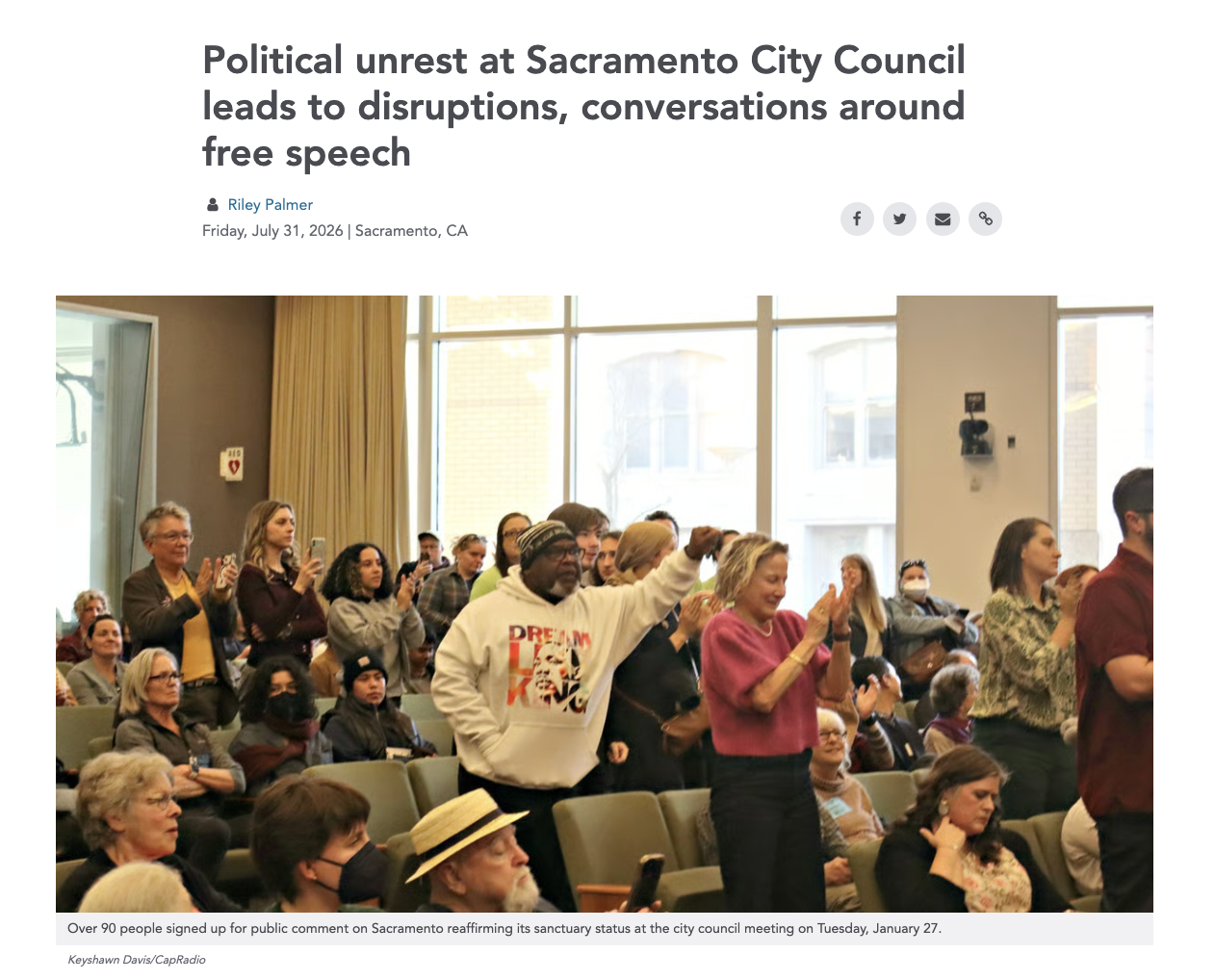
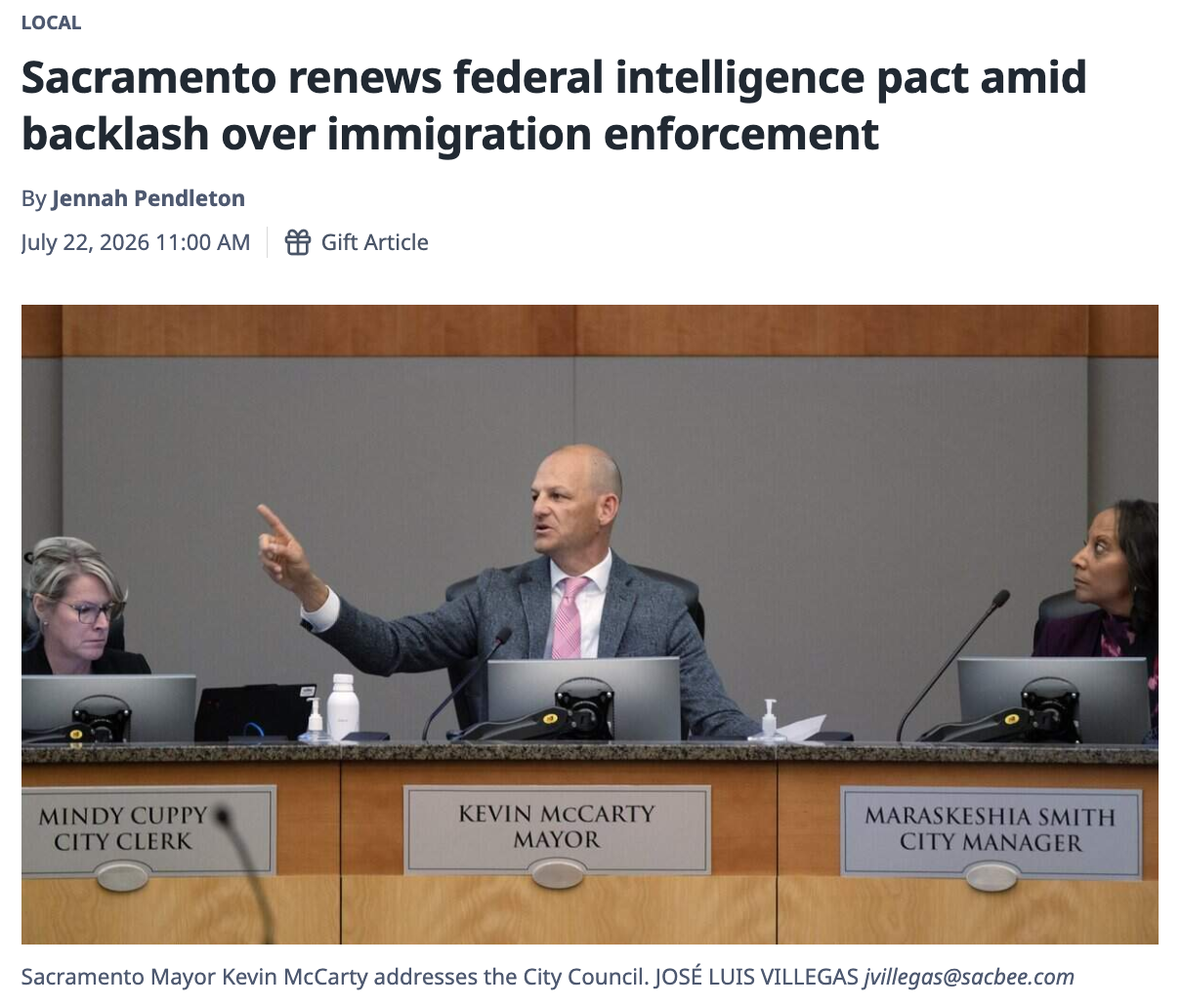
Sacramento City Council under the tenures of Mayors Kevin Johnson, Darrell Steinberg, and now Kevin McCarty have all shown massive disregard for public protests when those protests are levied against city council. There are several instances on the record where Mayors and other city officials talked over or interrupted people during public comment sections of city council meetings, ejected protesters and denied them their right to participate in meetings, or conspired against the public. In the summer of 2026 alone, the city council’s chambers have been shut down and emptied multiple times in response to protests.
At one of these meetings, City Councilor and Vice Mayor Karina Talamantes went viral for a hot mic moment implicating her in a conspiracy to ban protesters. After the city council chamber was emptied of Anti-ICE protesters, she attempted to plot with Mayor McCarty to ban “disruptive” attendees from city council chambers. As the Mayor reminded Talamentes that city council had no legal recourse to do this, Talamantes awkwardly stumbled over the Mayor to shut off his microphone when she realized it was broadcasting their conversation. The incident quickly became national news and the Vice Mayor’s social media has been ratioed into the ground because of it.
While it’s funny to see an pro-establishment politician squirm thanks to their own mistakes, there is nothing funny about a democratically elected public official brainstorming ways they can deny the public their rights to participate in the democratic process.
Mayor McCarty also shows no interest in hearing what people with dissenting opinions have to say. While he was the one to point out to Talamantes that they cannot outright ban people from the chambers just for being disruptive, he has an abysmal track record of listening to dissenting opinions. During the above mentioned meeting, Anti-ICE protesters filled the chambers and stood up for public comment to demand the city stay true to our sanctuary city status. Sadly, many of them struggled to get the mayor to make eye contact with them, let alone listen to them.
Plus, when it comes to the question of accessibility, Sacramento city council meetings themselves can hardly be considered “accessible” when one looks at their scheduled times. Most city council meetings happen on Tuesdays at 5 PM, a time when most people are still at work or just ending their day.
Also, before McCarty was mayor, a law was passed related to city council meeting times known as Measure K. Measure K amended the city charter in two ways; it did some inconsequential reshuffling of a few city jobs, but it also amended the city charter to allow the council to establish their public meeting times annually by a resolution vote. Sounds good right? Because in theory, the council can vote to meet at a time more accessible to those whose work schedules prevent them from participating. The only problem is, the city could meet at far less accessible times too if they approved it with a vote. After Measure K passed, the city council held one meeting a month at 2PM instead of the usual 5 PM. A time that was virtually inaccessible to anyone working a 9-5 job.
Of course, these are just a few examples of city officials showing disdain for the public’s right to free speech and participation, and it is not just elected officials. Former City Manager Howard Chan was incredibly dismissive towards Black Lives Matter protesters in the wake of several deaths by the hands of Sacramento Police officers, offering protesters little else but performative platitudes and band aid solutions like temporary officer suspensions and “investigations”. The Mayor at the time, Darrell Steinberg, was also dismissive, and frequently ejected BLM protesters from chambers or denied them access to public comment. This animosity towards the suffering of Sacramento’s black population led to massive public disdain that festered and eventually erupted after the death of Stephon Clark, leading to protesters taking over the city council chambers and shutting down their meetings.
Outside of the purely political and legal realms, there are other more disturbing examples. Mayor Kevin Johnson, whose legacy includes gentrifying Sacramento and allegedly sexually assaulting a minor when he played for the NBA, also assaulted a protester at a charity event for hitting him with a pie. Granted this didn’t happen at a city council meeting nor in council chambers, but it still shows that Sacramento leaders have a disturbing history of meeting dissent and protests with entitlement and violent disdain.
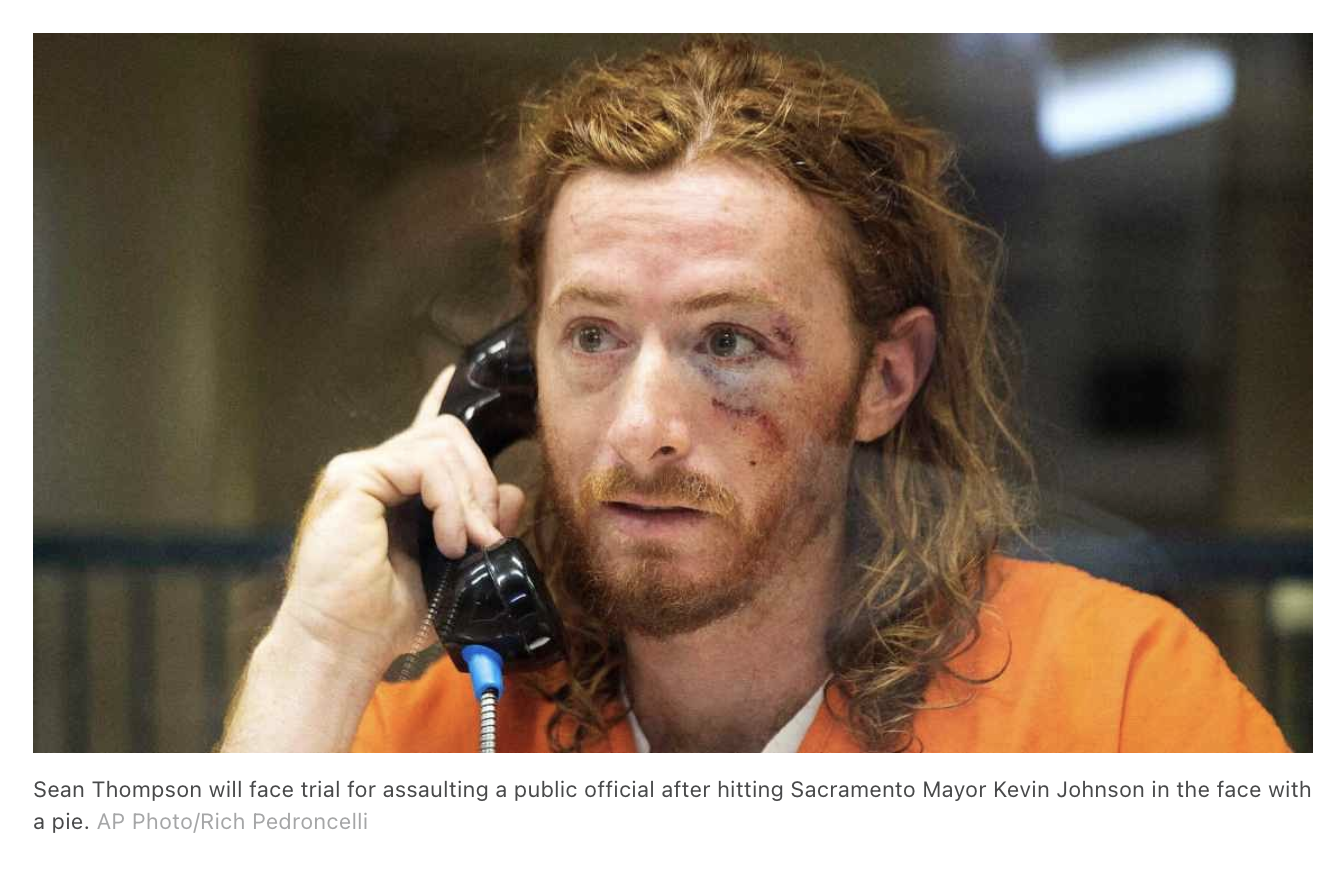
But why do Sacramento’s city council meetings get so contentious? Why do protesters come at city officials with so much heat? Well, when one takes a step back and looks at the issues at hand in all of the above scenarios, it is clear that the council is ignoring public outcry about deeply serious issues. Case in point, the BLM protests that happened under Steinberg.
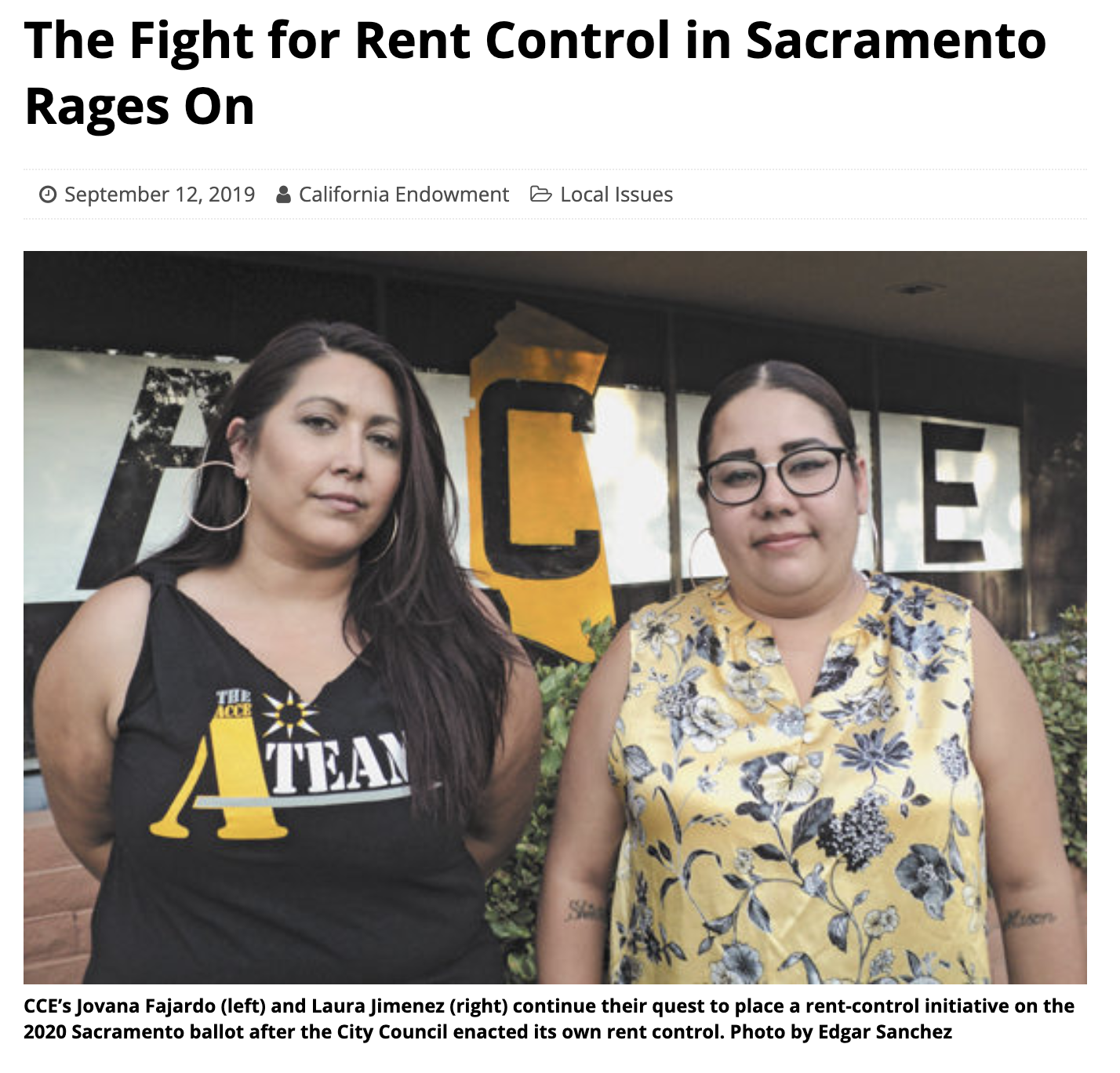
Further, under both Mayor Johnson and Steinberg, housing and homelessness (the motivation behind Kevin Johnson’s pie assailant) became increasingly contentious issues, peaking under Steinberg as several in the city fought for rent control, only to be met with responses like Measure K and less accessible meetings. These issues continue to intensify under McCarty as local cops continue to attack and sweep homeless camps, meanwhile the rate of unhoused people continues to rise thanks to constant rent hikes.
Basically, the more controversial the issue, the less our Mayors or city council seem interested in hearing from the public. Before the end of his last term, Mayor Steinberg was accused of violating the Brown Act when he tabled a resolution to support a ceasefire in Gaza without following the city’s due process. Another middle finger to the public, who only want to hear their city council stand against genocide.
The meetings mentioned about that McCarty shut down were meetings where the city council was voting on accepting funds for data fusion centers, which are hubs for local law enforcement to collude with Donald Trump’s fascist federal agencies (like DHS and ICE) as they conduct mass surveillance and carry out Trump’s racist agenda of state violence and deportations. In short, despite Sacramento's 30 plus year history as a sanctuary city, and promises from city council to protect immigrants, the city council created a loophole allowing local cops to work with ICE.
The list of examples could go on and on. It is only fair that the public react to such controversial issues with such intensity, and it only makes the councils active refusal to respect protesters and the Brown Act all the more idiotic and selfish.
The Brown Act is so essential to Californians’ access to the democratic process that state law now mandates that California’s locally elected officials regularly consult the state’s guidelines, which are regularly updated.
Your rights under the Brown Act are:
You have the right to attend your local government meetings
You have the right to comment on agenda items either before or during a government meeting
Meeting times must be announced in advance with the agendas attached
City officials are not allowed to conduct official business in secret meetings
The public is entitled to information about the processes and decisions made in any meeting
Decisions made in closed session meetings must still be made accessible to the public
If any public board is found in violation of the Brown Act, legal challenges can be brought to court and can potentially nullify decisions made at the compromised meeting
Knowing these rights, the deeper one dives into the history of Sacramento’s city officials the more one sees a disturbing and unignorable pattern. You can read more about the Brown Act and your rights on the ACLU’s website.