Driving While Black & Brown: Racist Traffic Stops in Sacramento
Written by James J. Jackson, Jr.
The saga of Sacramento’s institutional racism sadly continues. More evidence exposing the blatant racism of Sacramento’s police was found. The ACLU of Northern California recently released a report revealing an explicitly racial bias when it comes to traffic stops and Sacramento’s Police Department (Sac PD).
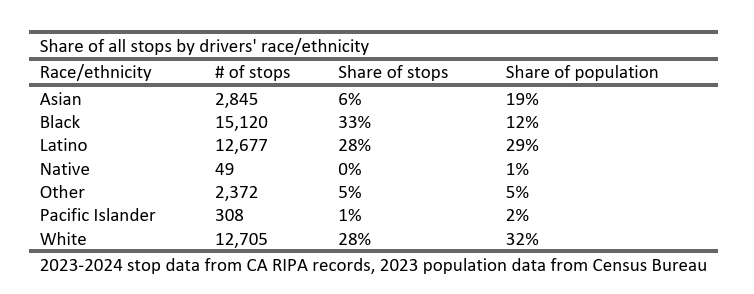
The report shows several discrepancies in Sac PD’s enforcement of traffic laws against Black and Latino drivers versus other races. Most notably, the report shows 33% of motorists pulled over by Sac PD are Black and 28% Latino, compared to only 18% of white drivers. Black drivers alone are pulled over three times more often than white drivers, all while only making up 12% of Sacramento’s population.
Often, Sac PD quickly escalates these situations with disgustingly violent force. Eric Murphy, a Black Meadowview resident, went viral when a video of him being stopped showed the police brutalizing him for expired registration tags. What is worse, Murphy claims that he was already pulled over nearly 50 times by local police before his viral incident. Murphy is just one example of an experience that thousands of black and brown motorists unfortunately know all too well.
Not only does the ACLU report show Sac PD’s inherent bias against non-white drivers, it shows their incompetence too. Vehicles that Sac PD searched for contraband yielded an arrest rate of less than 1%. Once again, it is obvious to see that Sac PD is wasting time, money, and resources just to harass Black and Brown people.
Undoubtedly, the “back the blue” simps will argue that pre-textual policing like this can help prevent violent crime. The idea being that by using stops for minor infractions like traffic violations as a pretext to search vehicles for narcotics or illegal weapons, the police can prevent more violent crimes. The facts say otherwise. Pretextual policing and traffic stops do not lead to a reduction of violent crime.
But those on team “Blue Lives Matter” might say that even if pretextual traffic stops do not prevent violent crime, they still help to protect the safety of motorists and pedestrians. Not so. The ACLU’s study also revealed that 70% of Sac PD’s traffic stops are for non-moving offenses, nor were they related to maintenance of a car’s safety equipment. The majority of cars that Sac PD pulls over are stopped for trivial violations like expired registration tags or obstructed windshield views, which under the law could be nothing more than a tiny ornament hanging from a mirror.
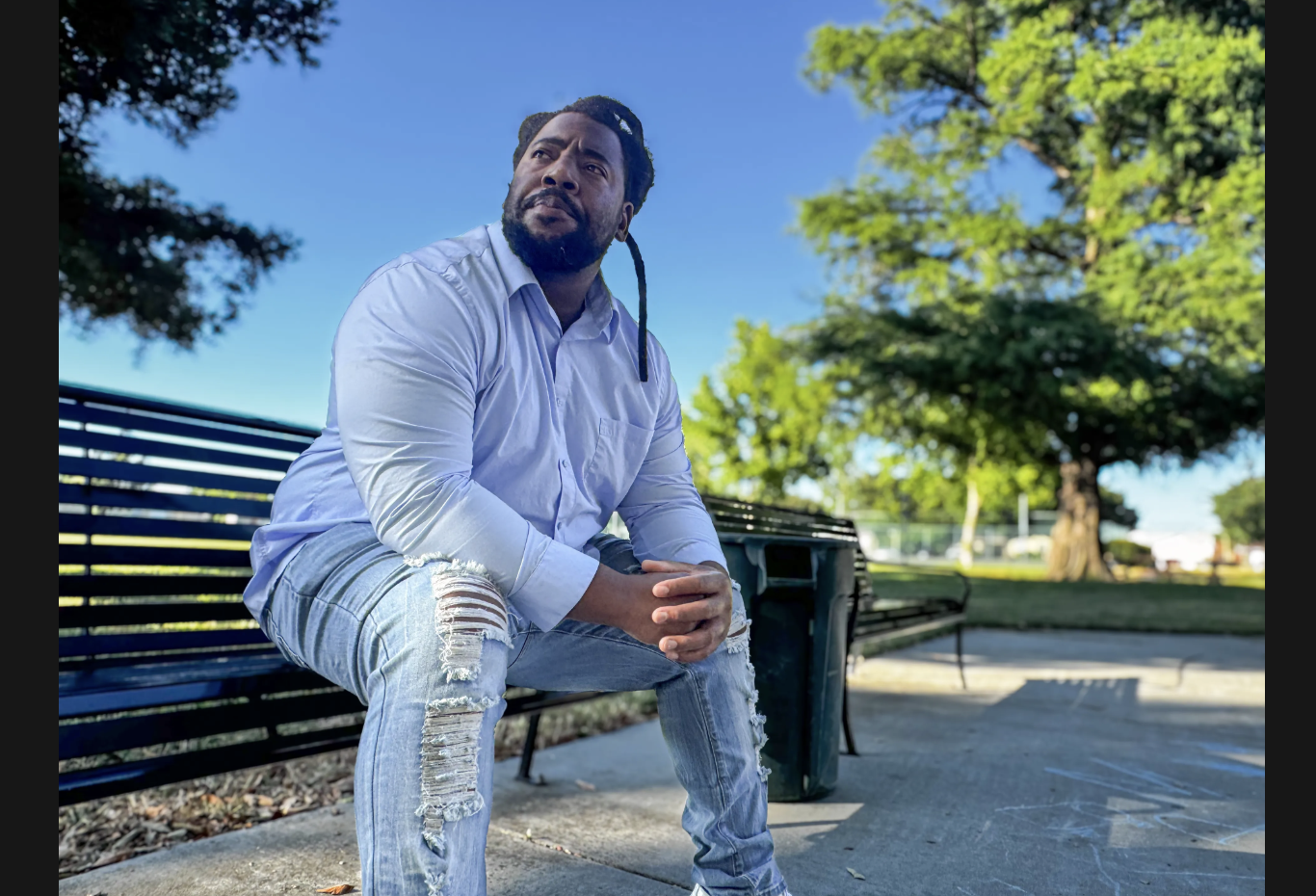
Eric Murphy, 34, was pulled over by Sacramento Police in 2024 for not using his turn signal which escalated to officers attempting to physically remove him from his car.
Robert J. Hansen, OBSERVER
If pretextual traffic stops are so obviously ineffective when it comes to protecting people, why is Sac PD still doing them? For one thing, they are a source of revenue generation, here is also the fact that traffic stops are a source of revenue generation for the state, which often trickles into the coffers of the county, city, and the courts.
The system is also heavily built in Sac PD’s favor. Numerous Supreme Court decisions allow police to utilize traffic stops to their whims with little to no restraint. In Whren V United States, the Supreme Court decided that a police officer’s intent when making a traffic stop is irrelevant so long as a violation of any kind is found. This means that, for example, if a white officer wants to stop a black motorist because they want to search them for drugs or guns, they are allowed to make the stop even if it does not lead to an arrest, so long as it does lead to a citation or arrest for any violation. (I.E. expired tags, broken tail lights, unserved arrest warrants, etc.)
Not only this, but the 2014 Supreme Court case of Heinen V. North Carolina stripped motorists of major fourth amendment protections. Before this ruling, if a cop pulled over a vehicle under a mistaken interpretation of a traffic law, but still found contraband or evidence of other crimes, the evidence was inadmissible when it came to the charge of the separate crime. The Heinin case overturned that precedent.
In other words, Sac PD intentionally targets non-white drivers just because they can.
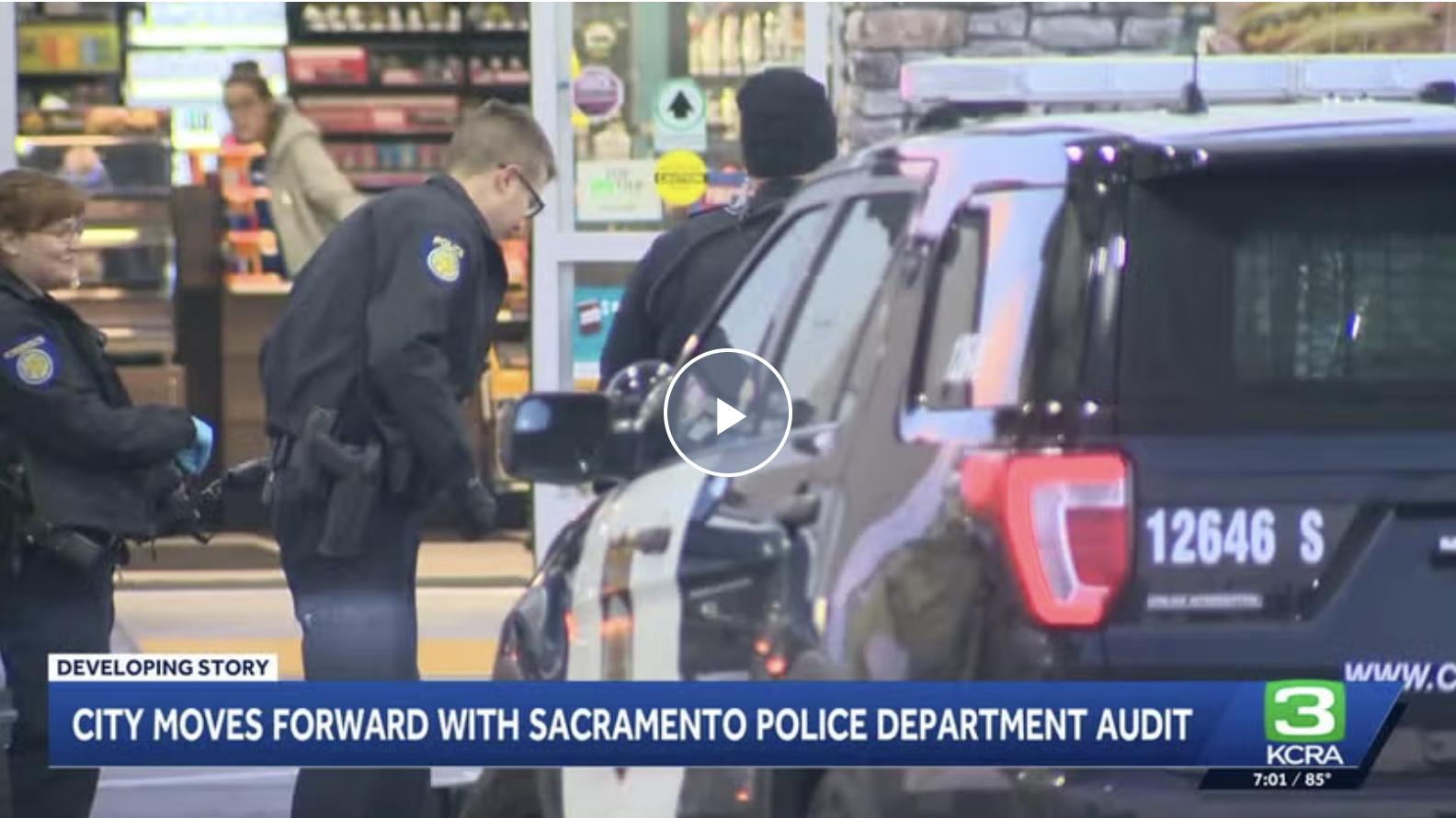
The release of the ACLU’s report is proof that active steps need to be taken if Sacramento ever wants to hold the police accountable for their intentional perpetuation of white supremacy. Thankfully, the report gained the attention of all major local news syndicates. That media attention lit a fire under city officials and forced their hands to support an audit of Sac PD’s biased practices. Of course, these audits are meaningless if they are not also followed up with an ordinance that creates real consequences for police. Which is especially difficult as the city continues to gut civilian watchdog groups.
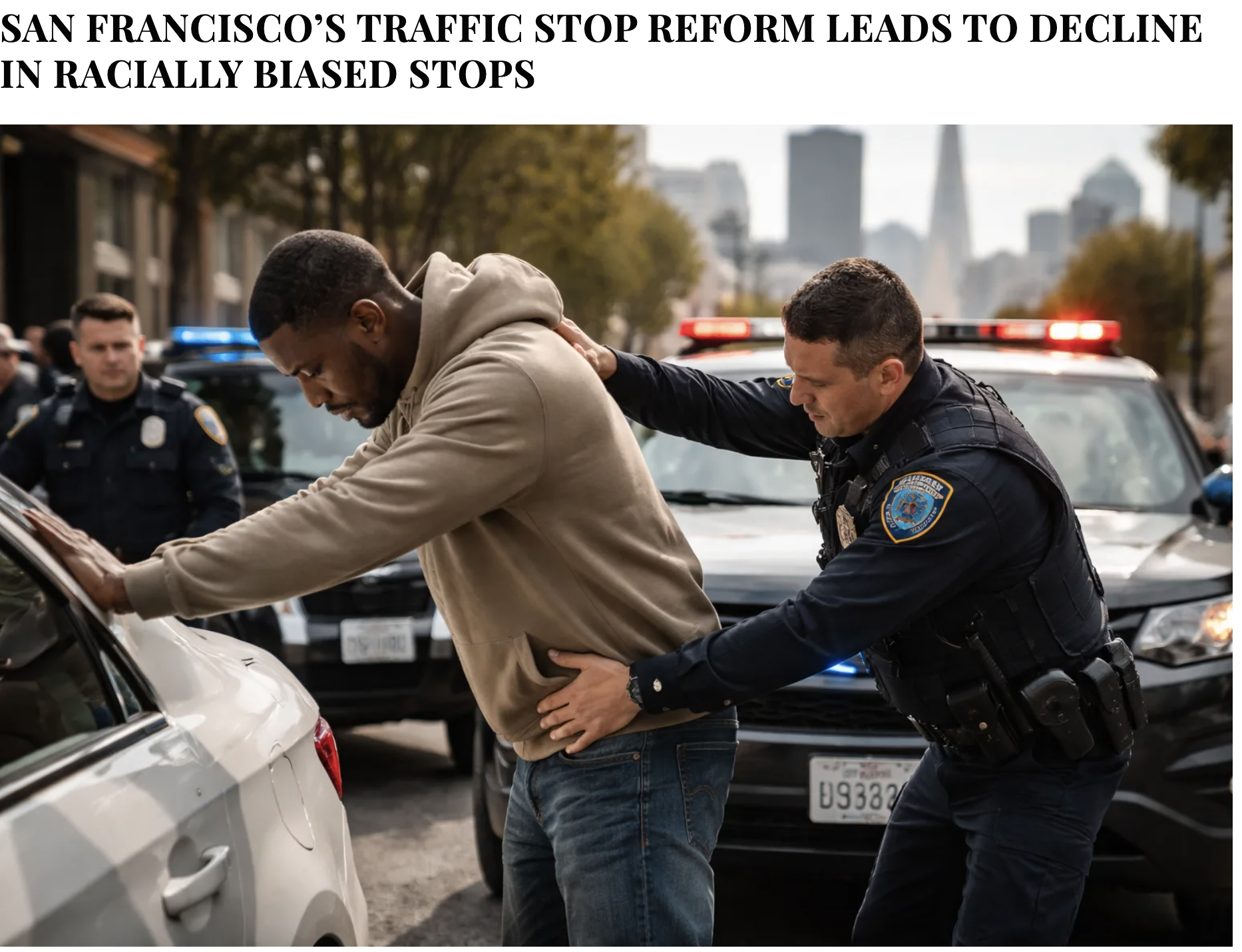
The ACLU has an extensive and impressive history of advocating for ordinances addressing racist traffic law enforcement practices, and many cities in California have taken proactive steps to prevent police from pulling over motorists on a racist whim. Oakland removed all armed officers from traffic enforcement and shifted the responsibility to the Department of Transportation. Berkeley PD is no longer allowed to make traffic stops for non moving violations. Los Angeles instituted an outright ban on pretextual traffic stops. San Francisco is seeing a steady decline in racially motivated traffic stops thanks to ACLU sponsored ordinances too. If these major California cities can take proactive steps to protect their black and brown citizens, our city can and should too!
Getting Sacramento city council to take initiative on anything is always easier said than done, but it can be done. As the ACLU mounts pressure by drawing attention to the issue with their revealing report, and as the audit of Sac PD is carried out, an ordinance written by the ACLU or others can be collaborated on with a supportive city council member, who can then introduce the ordinance for committee and city council approval. While it might sound like a burdensome, even tedious, task, it can be done. While serving in the state legislature, Mayor McCarty did support legislation to increase police accountability, he is obliged to do so as Sacramento’s mayor too.
Take heed of the ACLU’s report and pay close attention to Sac PD’s moves, other cities less than 2 hours away from us already took steps to hold cops accountable, but Sacramento needs to catch up. You can montior Sac PD’s activity in their daily report logs. We can hold Sac PD accountable. We can keep each other safe.